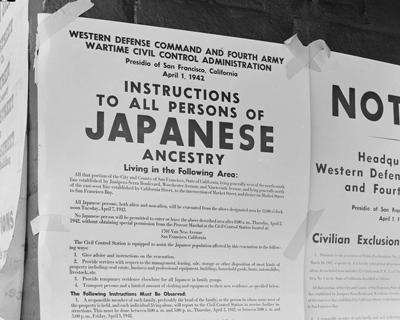
During World War II, more than 120,000 Japanese Americans were forcibly removed from their homes and placed in government-run incarceration camps across the United States, a dark chapter documented extensively by the National Archives. This policy, driven by fear and wartime hysteria following the attack on Pearl Harbor, resulted in the loss of civil liberties and severe personal hardships for thousands of innocent citizens and residents. The National Archives’ collection offers a comprehensive and sobering look at this period, preserving vital records, photographs, and firsthand accounts that shed light on the injustices faced by the Japanese-American community during this tumultuous era.
Historical Context and Government Justifications for Japanese-American Incarceration
In the immediate aftermath of the attack on Pearl Harbor on December 7, 1941, fear and suspicion against Japanese-Americans surged across the United States. The government, citing concerns over national security and potential espionage, quickly moved to restrict the civil liberties of approximately 120,000 individuals of Japanese descent, most of whom were American citizens. Officials emphasized the need to act swiftly in the face of an uncertain and evolving threat, often pointing to the strategic vulnerability of the West Coast and perceived risks posed by community ties to the Japanese Empire.
Official government justifications for the incarceration were grounded in a combination of military necessity and political pressure:
- Military Intelligence Reports: Alleged but unsubstantiated concerns about sabotage and loyalty to Japan.
- Executive Order 9066: Empowered the Secretary of War to designate exclusion zones and remove “any or all persons” from these areas.
- Public and Political Sentiment: Heightened xenophobia and racial prejudice fueled by war propaganda and local pressures.
| Justification | Description |
|---|---|
| Executive Order 9066 | Legal foundation enabling exclusion zones and mass removal. |
| Military Necessity | Prevent potential espionage and sabotage on the West Coast. |
| Public Safety | Protect civilians amidst fears of invasion and attack. |
| Racial Prejudice | Widespread distrust of Japanese-Americans fueled by wartime hysteria. |
Life Inside the Camps Personal Stories and Daily Realities
Within the confines of barracks and under strict surveillance, internees navigated a daily existence marked by resilience and adaptation. Personal accounts reveal a community striving to maintain a sense of normalcy despite the harsh conditions imposed upon them. Families improvised with limited resources, creating makeshift gardens and engaging in cultural activities to preserve their heritage. Yet, the constant presence of armed guards and the intrusion of military authority reminded them of the loss of freedom and dignity endured.
Children and adults alike faced significant challenges, from cramped living quarters to inadequate healthcare. The emotional toll was palpable, as separation from the outside world created an atmosphere of uncertainty. Many internees documented their experiences through letters, diaries, and artwork, providing invaluable insights into life behind barbed wire fences. The following table succinctly captures some of the daily realities shared by those interned:
| Aspect | Experience | Impact |
|---|---|---|
| Housing | Communal barracks with minimal privacy | Strained family relationships and limited personal space |
| Work | Camp labor including farming and construction | Sense of purpose but also physical exhaustion |
| Education | Classes held in makeshift schools for children | Effort to maintain normalcy and hope for the future |
| Health | Limited medical facilities and supplies | Increased vulnerability to illness and stress |
- Community resilience: Internment camps became spaces where cultural traditions were preserved and reinforced.
- Emotional complexity: Feelings ranged from fear and anger to hope and perseverance among internees.
- Intergenerational impact: Both older and younger generations grappled with the trauma and disruption caused by incarceration.
Legal Battles and Civil Rights Impact on Japanese-American Communities
In the aftermath of World War II, many Japanese-American families confronted not only the trauma of internment but also widespread legal challenges as they fought to reclaim their civil rights. Landmark cases, such as Korematsu v. United States, spotlighted the constitutional crises surrounding Executive Order 9066. Despite this Supreme Court ruling upholding internment, decades later, the civil rights movement and legal advocates galvanized efforts to expose governmental injustices and advocate for reparations. These legal battles illuminated systemic racial discrimination and challenged the pervasive prejudices that fueled wartime policies.
The perseverance of Japanese-American communities paved the way for lasting reforms and federal acknowledgments, notably the Civil Liberties Act of 1988, which formally apologized and provided monetary compensation to surviving internees. This legislative milestone was bolstered by a sustained campaign emphasizing historical recognition, community resilience, and the protection of civil liberties for all. Key elements influencing these efforts include:
- Personal testimonies and oral histories from former internees.
- Legal precedents that reexamined constitutional protections during times of national security concerns.
- Intergenerational advocacy focusing on education and civil rights activism.
- Government accountability and transparency initiatives to prevent future injustices.
| Legal Milestone | Year | Impact |
|---|---|---|
| Korematsu v. United States | 1944 | Upheld internment, later criticized for civil rights violation |
| Commission on Wartime Relocation | 1983 | Recommended reparations and formal apology |
| Civil Liberties Act | 1988 | Official apology & monetary reparations |
Recommendations for Education and Preservation of Incarceration History
To ensure the legacy of Japanese-American incarceration is neither forgotten nor repeated, educators and historians must develop inclusive curricula that highlight the nuanced experiences of those affected. Schools and universities should incorporate primary source materials, such as photographs, government documents, and firsthand accounts available at the National Archives, to bring authenticity and emotional gravity to the lessons. Engaging tools like interactive timelines and virtual reality visits to former camp sites can transform abstract history into tangible experiences, fostering deeper understanding and empathy among students.
Community involvement is equally vital. Collaborating with Japanese-American organizations and survivors’ families enriches the narrative, allowing diverse perspectives to be shared publicly through workshops, exhibitions, and oral history projects. Preservation efforts can be supported by local historical societies through the digitization of artifacts and the maintenance of site memorials. The table below outlines key strategies for public education and preservation initiatives:
| Strategy | Description | Target Audience |
|---|---|---|
| Primary Source Integration | Use archival documents to enhance curriculum | Educators & Students |
| Community Storytelling | Oral histories and family narratives shared publicly | General Public & Researchers |
| Memorial Site Preservation | Maintain and digitize historical incarceration sites | Historians & Tourists |
| Interactive Learning Tools | VR experiences and digital timelines | Tech-Savvy Learners |
Concluding Remarks
The incarceration of Japanese Americans during World War II remains one of the most somber chapters in United States history. As documented extensively in the National Archives, these records serve as critical reminders of the impact of fear and prejudice on civil liberties. Understanding this history not only honors those affected but also underscores the importance of vigilance in protecting the rights of all citizens. Continued access to these archives ensures that the lessons of the past inform a more just and equitable future.