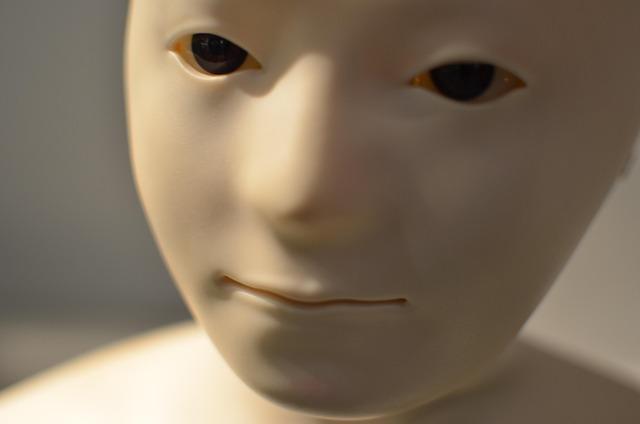
Gatsby Unveils the First Humanoid Robot Tailored for Household Cleaning in the U.S.
Revolutionizing Domestic Robotics: Gatsby’s Humanoid Cleaning Robot
Gatsby has pioneered a remarkable innovation in the consumer robotics sector by launching the first humanoid robot explicitly engineered for home cleaning within the United States. This landmark introduction, recently publicized via Business Wire, represents a pivotal advancement in embedding sophisticated robotics into daily domestic routines. As robotic technologies accelerate in sophistication, Gatsby’s creation redefines convenience and operational efficiency, promising to reshape how American households manage cleaning and maintenance.
The robot’s design harmonizes state-of-the-art artificial intelligence with advanced mechanical engineering, delivering a cleaning assistant that not only performs tasks with precision but also engages users through user-friendly interfaces. This debut underscores Gatsby’s dedication to blending innovative technology seamlessly into everyday life.
- Dynamic Spatial Awareness: Employs live environment mapping to navigate and avoid obstacles effortlessly.
- Human-Mimicking Manipulation: Features articulated arms and hands capable of handling a variety of cleaning duties.
- Smart Home Compatibility: Integrates with leading voice assistants for effortless, hands-free control.
- Green Operation: Designed for minimal energy consumption, promoting sustainability.
| Feature | Advantage |
|---|---|
| Machine Learning | Adapts cleaning patterns to individual household needs |
| Extended Battery Life | Operates continuously for up to 8 hours |
| Compact Humanoid Frame | Facilitates easy movement through tight spaces |
| Advanced Safety Sensors | Protects users and pets by detecting obstacles and hazards |
Enhancing Home Cleaning: User-Centric Technology and Experience
Gatsby’s humanoid robot represents a fusion of cutting-edge robotics with practical household applications, redefining the approach to domestic chores. Beyond mere automation, this technology prioritizes user experience through intelligent design and adaptive capabilities. Equipped with sophisticated sensors and AI algorithms, the robot comprehends complex home layouts and dynamically adjusts to the intricacies of everyday cleaning tasks. By continuously learning from user interactions, it evolves to deliver a highly personalized and effortless cleaning experience.
- Multimodal Communication: Supports voice commands and gesture recognition, eliminating the need for complicated setups.
- Smart Task Scheduling: Prioritizes chores based on user preferences and immediate household demands.
- Optimized Energy Use: Employs intelligent power management to maximize battery efficiency without compromising performance.
- Robust Safety Features: Includes obstacle detection and emergency stop mechanisms to ensure safe operation around children and pets.
| Technology | Benefit | User Impact |
|---|---|---|
| Adaptive Navigation | Accurately maps and avoids furniture and pets | Minimizes interruptions and manual corrections |
| Custom Cleaning Modes | Tailors settings to different room types | Delivers superior cleaning results aligned with lifestyle |
| Real-Time Status Updates | Provides instant feedback through a mobile app | Enhances transparency and user control |
Consumer Trends and Market Influence of Home Robotics
The arrival of Gatsby’s humanoid cleaning robot signals a transformative moment in consumer robotics, altering public perception and adoption patterns. Initial user reviews reveal widespread excitement about the robot’s ability to navigate complex home environments safely and efficiently. The combination of advanced AI and dexterous humanoid design has shifted what was once a futuristic concept into a practical household tool, particularly appealing to busy families and technology enthusiasts.
Nevertheless, challenges such as consumer trust and affordability continue to influence market penetration. Recent industry data highlights a growing interest tempered by cautious optimism, with key trends including:
- Rising demand for customizable robotic solutions that adapt to diverse home layouts and lifestyles.
- Elevated expectations for reliability, ease of maintenance, and intuitive user interfaces.
- Innovative service offerings like subscription models aimed at reducing upfront costs and increasing consumer confidence.
| Consumer Segment | Adoption Percentage | Main Concern |
|---|---|---|
| Early Enthusiasts | 24% | Performance and functionality |
| Prudent Evaluators | 46% | Cost considerations |
| Skeptics | 30% | Privacy and data security |
Best Practices for Seamless Integration of Humanoid Robots in Homes
Successfully incorporating humanoid robots like Gatsby’s into residential settings requires a focus on intuitive user interfaces and personalized adaptability. Homeowners benefit from straightforward setup instructions that align the robot’s functions with their daily routines, ensuring technology enhances rather than disrupts lifestyle. Prioritizing stringent privacy and security measures is essential to build and maintain consumer trust. Furthermore, adaptive learning enables the robot to refine its tasks autonomously, minimizing the need for constant user input.
Integration strategies should also emphasize compatibility with existing smart home ecosystems to facilitate smooth operation. The following table outlines critical focus areas for effective deployment:
| Integration Focus | Recommended Action | Anticipated Benefit |
|---|---|---|
| Connectivity | Ensure seamless Wi-Fi and IoT device compatibility | Enables remote control and uninterrupted operation |
| Data Privacy | Implement robust encryption and user data controls | Builds consumer confidence and trust |
| Customization | Allow programming of tasks tailored to specific household needs | Maximizes cleaning efficiency and user satisfaction |
- Consistent firmware updates to enhance security and functionality.
- Accessible customer support for troubleshooting and guidance.
- Design adaptability to accommodate diverse home layouts and obstacles.
Conclusion: Gatsby’s Role in Shaping the Future of Home Automation
Gatsby’s introduction of the first humanoid robot dedicated to household cleaning in the U.S. represents a landmark achievement in consumer robotics. This innovation not only highlights the potential of advanced robotics technology but also signals a paradigm shift in how automation integrates with daily living. As this technology gains traction, it is poised to influence broader adoption of humanoid robots across residential and commercial spaces nationwide, heralding a new era of intelligent home assistance.