Unveiling the Political Spectrum of America’s Largest Cities: New Insights and Regional Patterns
Recent findings from the Pew Research Center provide a fresh perspective on the political orientations of the United States’ most populous metropolitan areas. As the nation’s political environment shifts, recognizing the ideological distinctions among urban centers is vital for decision-makers, political analysts, and engaged citizens. This article delves into the data behind these trends, highlighting how economic conditions, cultural backgrounds, and demographic shifts contribute to the political identities of major cities across the country.
Regional Political Patterns in Major US Metropolitan Areas: A Closer Look
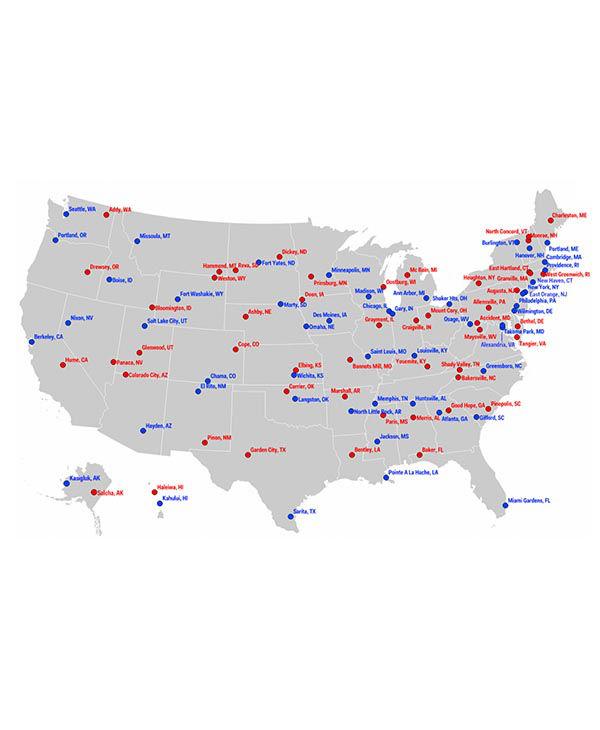
The latest data reveals intriguing regional variations in political leanings among America’s largest cities. While liberal ideologies remain dominant along the West Coast, several Midwestern and Southern cities are witnessing a notable increase in conservative viewpoints. This evolving landscape challenges the conventional binary of red versus blue, illustrating how local economic bases, cultural legacies, and migration flows uniquely influence political attitudes in different regions.
- West Coast urban centers such as San Francisco and Seattle continue to lead with strong liberal majorities, driven by innovation and progressive social values.
- Midwestern cities including Kansas City and Indianapolis are experiencing a surge in conservative support, reflecting changing suburban dynamics.
- Southern metropolitan areas like Houston and Atlanta display a complex political mosaic, balancing progressive movements with entrenched conservative communities.
| City | Region | Political Orientation | Distinctive Trend |
|---|---|---|---|
| San Francisco | West Coast | Liberal (85%) | Tech-driven progressive culture |
| Kansas City | Midwest | Conservative (60%) | Growing suburban conservatism |
| Atlanta | South | Balanced (50/50) | Demographic diversity shaping politics |
| Seattle | West Coast | Liberal (78%) | Strong environmental advocacy |
How Socioeconomic and Cultural Elements Shape Urban Political Identities
The ideological makeup of America’s urban centers is deeply influenced by a combination of social factors and economic foundations. Cities characterized by a youthful population, high levels of educational attainment, and significant immigrant communities tend to lean liberal. These environments often prioritize progressive policies such as social equity, environmental sustainability, and expanded public services. Additionally, metropolitan areas with thriving technology, finance, and creative sectors foster cultures that embrace innovation and social progress.
In contrast, cities with economies rooted in manufacturing, agriculture, or resource extraction often maintain conservative political tendencies. These communities emphasize economic security, job preservation, and traditional social values linked to their historical and cultural backgrounds. Migration patterns from rural to urban areas also contribute to this divide, as conservative enclaves within larger cities uphold longstanding cultural norms resistant to rapid change. Key distinctions include:
- Liberal urban centers: Younger median age, higher education rates, economies driven by tech and services.
- Conservative urban centers: Older populations, industrial economic bases, emphasis on economic protectionism.
| Characteristic | Liberal Cities | Conservative Cities |
|---|---|---|
| Median Age | 32 years | 45 years |
| Education Level (Bachelor’s or higher) | 60% | 35% |
| Economic Sectors | Technology, Finance, Creative Industries | Manufacturing, Mining, Agriculture |
| Population Diversity | Highly diverse, significant immigrant presence | Less diverse, predominantly native-born residents |
Strategic Considerations for Policymakers and Political Campaigns in Varied Urban Landscapes
As metropolitan populations become increasingly heterogeneous in both demographics and political beliefs, policymakers must develop tailored approaches that address the distinct needs of their communities. The data highlights the importance of nuanced strategies that respect the coexistence of liberal and conservative values within cities. Uniform policies on issues like affordable housing, public transit, or law enforcement risk alienating key constituencies or failing to resolve core challenges effectively. A granular understanding of neighborhood-level political compositions can guide equitable resource allocation and enhance civic participation.
Political campaigns, too, must adapt by moving beyond broad urban-rural stereotypes. Leveraging detailed voter data enables campaigns to craft targeted messages that resonate with diverse constituencies. Even in cities broadly categorized as liberal or conservative, ideological diversity exists and can influence election outcomes. Effective campaign strategies might include:
- Precision targeting: Utilizing precinct-level insights to customize outreach and address specific voter concerns.
- Building broad coalitions: Identifying shared priorities across ideological divides to expand support.
- Facilitating community engagement: Hosting inclusive forums that elevate marginalized voices and reduce political polarization.
| Strategy | Description | Expected Outcome |
|---|---|---|
| Precision Targeting | Tailored messaging for specific voter groups | Higher voter turnout and persuasion |
| Coalition Building | Uniting diverse voters around common issues | More stable and expansive support |
| Community Engagement | Creating platforms for inclusive dialogue | Reduced polarization and increased trust |
Empowering Citizens to Foster Unity Across Political Divides
Residents in politically diverse cities have a vital role in bridging ideological gaps through active participation. Engaging in community forums, attending local government meetings, and joining nonpartisan civic organizations can promote mutual understanding and collaborative problem-solving. By focusing on shared objectives rather than partisan differences, citizens can influence policies that reflect collective interests.
Practical steps for community members include:
- Participating in bipartisan discussion groups to encourage respectful dialogue.
- Communicating constructively with elected representatives.
- Organizing neighborhood initiatives centered on common concerns like safety and education.
- Supporting voter education programs to enhance informed participation.
Below is an illustrative overview of how different forms of civic engagement can impact community cohesion:
| Engagement Type | Estimated Effect on Unity | Typical Participation Rate |
|---|---|---|
| Town Hall Attendance | Moderate (+15%) | 10-15% |
| Community Advisory Board Membership | High (+30%) | 3-5% |
| Neighborhood Volunteer Networks | Moderate (+20%) | 8-12% |
| Bipartisan Discussion Groups | Significant (+35%) | 5-7% |
Conclusion: Navigating the Complex Political Fabric of America’s Cities
The evolving political contours of the nation’s largest urban centers, as highlighted by Pew Research Center’s recent analysis, underscore the multifaceted nature of American political life. Recognizing the diverse ideological landscapes within cities is essential for effective governance, strategic campaigning, and active citizenship. These metropolitan areas not only mirror broader national trends but also cultivate distinct political identities shaped by their unique social and economic contexts. Staying attuned to these dynamics is crucial for anticipating the future trajectory of American politics.