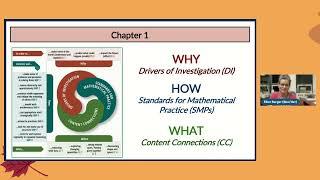
California Adopts Innovative Math Framework to Foster Equity and Deeper Comprehension
California has introduced a transformative math framework designed to overhaul the teaching of mathematics in its public schools. This new approach shifts away from traditional memorization techniques, emphasizing instead equity, conceptual clarity, and analytical thinking. The framework aims to close persistent achievement gaps by guaranteeing that every student, irrespective of their background, receives access to a robust and meaningful math education. Educators are encouraged to prioritize understanding mathematical principles and applying them to real-life problems over mere procedural drills. Core features of the framework include:
- Promoting student dialogue and cooperative learning experiences
- Incorporating culturally responsive examples to enhance relevance
- Concentrating on foundational concepts rather than rapid topic progression
While many praise the framework for its inclusive vision, it has also ignited debate. Some stakeholders worry about the reduced focus on traditional algorithms and the challenges teachers might face adapting to these new pedagogical methods. To address these concerns, the state has outlined clear distinctions between the mathematical concepts students should grasp at each grade and the skills they should achieve fluency in, summarized below:
| Grade Range | Conceptual Emphasis | Skill Fluency |
|---|---|---|
| Kindergarten to 2nd Grade | Understanding number relationships and sense | Mastery of basic addition and subtraction facts |
| 3rd to 5th Grade | Grasping multiplication and division concepts | Fluency in multiplication tables |
| 6th to 8th Grade | Exploring ratios, proportions, and introductory algebra | Competence in solving equations and simplifying expressions |
Concerns Over Reduced Focus on Procedural Fluency and Algorithmic Practice
A significant number of educators and parents have raised alarms about the framework’s diminished emphasis on procedural skills and algorithmic fluency. Critics argue that while conceptual understanding is vital, neglecting the practice of standard algorithms may leave students without the essential foundational skills needed for mathematical fluency. This could potentially create obstacles in mastering advanced math topics and negatively affect performance on standardized assessments.
Opponents advocate for a balanced curriculum that nurtures both computational proficiency and critical reasoning. They contend that procedural fluency serves as a crucial foundation for tackling complex mathematical challenges and should not be sidelined in favor of less structured learning methods. Their primary concerns include:
- Reduced memorization drills: May weaken students’ automatic recall of essential math facts.
- Potential drop in standardized test scores: Procedural mastery often correlates with higher test performance.
- Risk of widening achievement disparities: Students requiring additional support might struggle without explicit instruction in algorithms.
| Component | Previous Standards | New Framework |
|---|---|---|
| Algorithm Practice | Strongly Emphasized | Less Emphasized |
| Conceptual Understanding | Secondary | Primary Emphasis |
| Procedural Fluency | Core Focus | Integrated but Not Central |
Encouraging Collaborative Learning and Practical Problem-Solving in Math Education
Central to the new framework is a pedagogical shift from individual achievement metrics toward collaborative learning environments that simulate authentic, real-world challenges. Students are encouraged to participate in group projects and open-ended tasks that deepen their understanding and enhance critical thinking abilities. Educators are trained to facilitate meaningful discussions, promote peer collaboration, and cultivate classroom cultures where errors are embraced as valuable learning opportunities rather than setbacks.
Key strategies include:
- Group challenges modeled after real industry problems
- Utilization of technology to replicate practical applications
- Ongoing formative assessments prioritizing learning processes over final answers
- Encouragement of diverse problem-solving methods to boost creativity
| Activity Type | Learning Outcome | Collaboration Format |
|---|---|---|
| Design Thinking Exercises | Innovation and Empathy Development | Small Group Work |
| Data Interpretation Challenges | Enhanced Critical Analysis | Partner Collaboration |
| Live Problem-Solving Sessions | Application and Flexibility | Whole-Class Engagement |
Importance of Robust Teacher Training and Adaptive Assessment Methods
Experts emphasize that successful adoption of this framework hinges on comprehensive professional development for educators that goes well beyond familiarizing teachers with new curriculum content. Continuous training is essential to equip instructors with innovative teaching techniques and adaptive strategies tailored to diverse student needs. This ensures educators can effectively nurture critical thinking and problem-solving skills, which are central to the framework’s vision.
Furthermore, there is a growing consensus on the necessity for dynamic assessment systems that better capture student learning progress and accommodate varied learning styles. Moving away from exclusive reliance on traditional exams, specialists advocate for a blend of formative assessments and real-time feedback mechanisms. The table below highlights recommended evaluation approaches and their advantages:
| Assessment Method | Primary Advantage |
|---|---|
| Formative Assessments | Provides immediate feedback to tailor instruction |
| Project-Based Evaluations | Encourages practical application of mathematical concepts |
| Performance Tasks | Assesses in-depth understanding and analytical skills |
| Adaptive Testing | Adjusts difficulty to match individual student ability |
Looking Ahead: The Future of Math Education in California
As California advances with the implementation of its revamped math framework, discussions about its content and practical application are expected to persist. Proponents view this initiative as a forward-thinking stride toward fostering equity and inclusiveness in math education. Conversely, skeptics caution about potential compromises in academic rigor and student achievement. The coming years will be critical as educators, policymakers, and families observe how these reforms influence classroom experiences and shape the mathematical proficiency of California’s diverse student body.