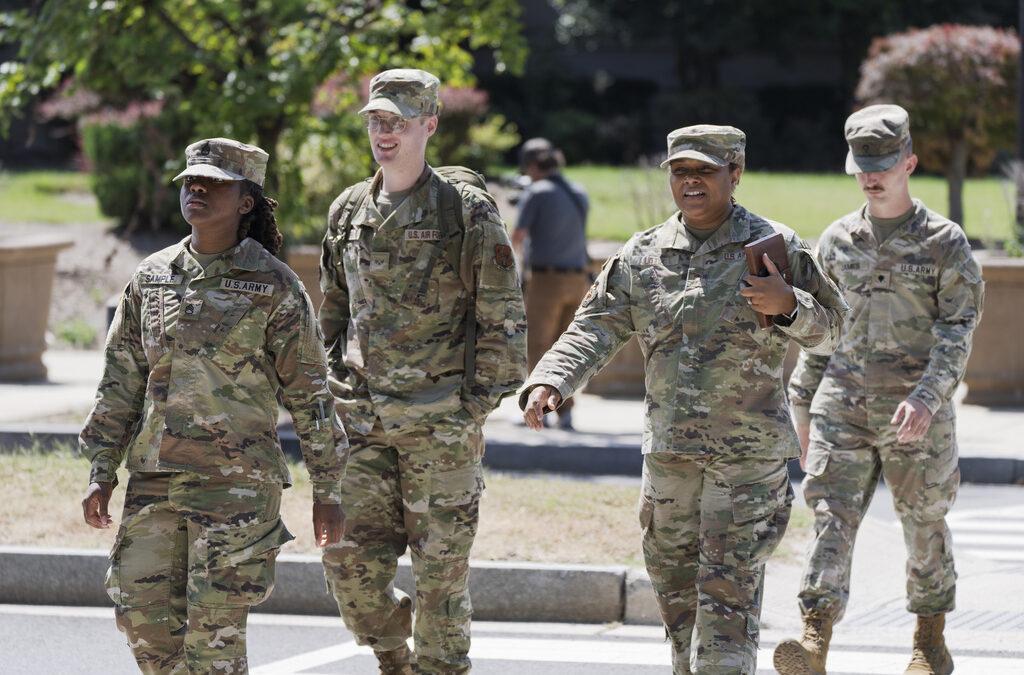
Former President Donald Trump has announced that he is considering deploying National Guard troops to San Francisco, citing concerns over the city’s current challenges. In a recent statement, Trump emphasized his commitment to restoring order and prosperity, declaring, “We are going to make it great.” The proposal comes amid ongoing debates about public safety and governance in the Bay Area, raising questions about the role of federal forces in addressing local issues.
Trump Proposes National Guard Deployment to Address San Francisco’s Rising Crime
Former President Donald Trump has announced his consideration of deploying National Guard troops to San Francisco in response to escalating crime rates that local authorities have struggled to contain. Emphasizing a need for decisive action, Trump expressed confidence that federal intervention could restore order and security in the city, which has witnessed a surge in violent incidents and property crimes. His proposal underscores a growing debate about federal involvement in urban crime, highlighting divisions between local governance approaches and national security perspectives.
- Crime Increase: Recent statistics indicate a rise in both violent and non-violent crimes across key San Francisco neighborhoods.
- Local Response: City officials have implemented various community policing strategies, yet challenges persist.
- Federal Role: Trump’s proposition advocates for National Guard deployment as a means of supplementing local law enforcement efforts.
| Crime Type | Year-over-Year Increase | San Francisco Dept. Initiative |
|---|---|---|
| Robbery | 15% | Expanded patrols |
| Aggravated Assault | 20% | Community outreach |
| Burglary | 12% | Neighborhood watch programs |
Impact and Response of Local Authorities to Federal Intervention Plans
Local authorities in San Francisco have expressed a mixture of concerns and cautious optimism following President Trump’s indication that National Guard troops may be deployed to the city. Officials emphasize the need for a coordinated approach that respects local governance while addressing public safety challenges. San Francisco’s mayor highlighted the importance of community input and maintaining existing efforts focused on social services and law enforcement partnerships, rather than relying solely on military presence.
City officials have outlined key priorities amid federal intervention discussions:
- Ensuring transparent communication between local, state, and federal agencies
- Protecting civil liberties while enhancing public safety
- Addressing root causes of crime through social programs and housing initiatives
- Monitoring impact of any National Guard deployment on community relations
| Authority | Stance on National Guard Deployment | Key Response Measure |
|---|---|---|
| San Francisco Mayor | Cautiously Opposed | Focus on community programs |
| San Francisco Police Chief | Conditional Support | Collaboration on public safety strategies |
| California Governor | Neutral | State-federal coordination efforts |
Analysis of National Guard’s Role in Urban Crime Reduction Strategies
Deploying National Guard troops in urban centers has been a contentious yet impactful approach in addressing escalating crime rates. Historically, their presence serves as a force multiplier, providing immediate reinforcements to strained local law enforcement agencies. In cities facing surges in violent offenses, such as San Francisco, the Guard’s involvement often emphasizes a multi-faceted strategy, combining visible patrols with community engagement to restore civil order. Key aspects of their role include:
- Rapid response capabilities in high-crime hotspots
- Supporting crime prevention through increased street presence
- Assisting in logistical operations for local police units
- Providing specialized units for crowd control and crisis situations
However, the effectiveness of deploying National Guard units varies and is frequently debated. Critics argue that a militarized approach risks alienating residents and may only provide a temporary reduction in crime without addressing root causes. A comparative overview of previous deployments reveals mixed outcomes:
| City | Crime Reduction (%) | Deployment Duration | Post-Deployment Trend |
|---|---|---|---|
| Los Angeles (1992) | 15% | 3 months | Crime spike after withdrawal |
| Detroit (2014) | 10% | 6 weeks | Sustained moderate decline |
| Baltimore (2015) | 8% | 4 weeks | Return to baseline after 1 month |
Time-limited enforcement interventions may help stabilize cities during acute crises, but without comprehensive and long-term reforms, including social services and community trust-building, National Guard deployment alone is unlikely to create permanent crime reduction. This underscores the need for integrated approaches that complement military support with policy and societal change.
Expert Recommendations for Collaborative Approaches to San Francisco’s Public Safety Challenges
San Francisco’s multifaceted public safety challenges require a nuanced, community-driven response. Experts emphasize that beyond temporary measures like deploying the National Guard, sustainable progress hinges on enhanced collaboration between law enforcement agencies, city officials, social service providers, and neighborhood organizations. This model promotes shared responsibility in addressing the root causes of crime, including homelessness, substance abuse, and economic disparity.
- Community Policing: Encouraging officers to build trust and partnerships within neighborhoods to proactively deter crime.
- Integrated Service Networks: Coordinating mental health, housing, and addiction services alongside enforcement efforts.
- Data-Driven Strategies: Using real-time analytics to allocate resources effectively and identify emerging hotspots.
| Key Stakeholders | Roles | Impact |
|---|---|---|
| Law Enforcement | Maintain order, engage community | Reduced crime rates |
| Social Services | Address underlying social issues | Lower recidivism |
| Local Government | Policy, funding, oversight | Enhanced coordination |
| Community Groups | Advocacy, outreach, trust-building | Stronger community ties |
The Conclusion
As the debate over the deployment of National Guard troops to San Francisco unfolds, the coming weeks will be critical in determining the impact of such a measure on the city’s public safety and community relations. Former President Trump’s statement underscores his continued focus on law and order as a central political issue. Residents and officials alike await further details on the proposal and its potential implications for San Francisco’s future.