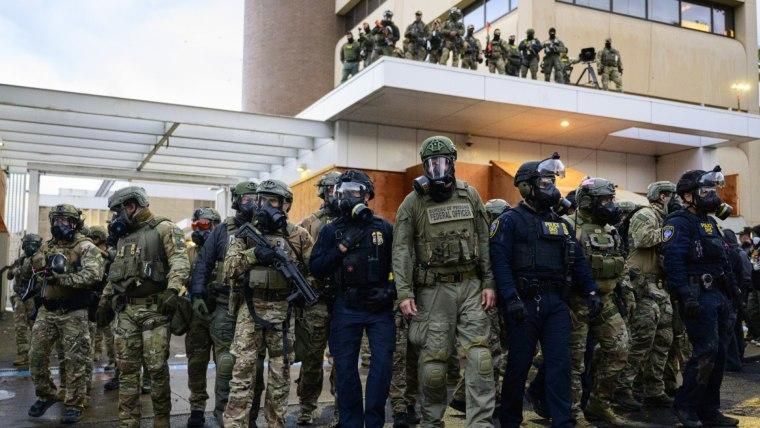
Federal Court Authorizes National Guard Deployment to Address Unrest in Portland
In a landmark ruling, an appellate court has authorized the Trump administration to send National Guard troops to Portland amid persistent protests and civil disturbances. This judicial decision represents a crucial step in the federal government’s efforts to support local law enforcement and safeguard federal properties during a period of heightened unrest. By permitting the deployment, the court has reinforced the federal government’s role in stabilizing the city while navigating the complex interplay between security measures and civil rights.
Highlights of the court’s ruling include:
- Judicial endorsement of federal intervention within legal boundaries.
- Improved collaboration between federal and state agencies to expedite response efforts.
- Augmented support for law enforcement tasked with protecting public safety and federal assets.
| Area of Focus | Effect |
|---|---|
| Federal Jurisdiction | Strengthened |
| National Guard Authorization | Granted |
| Interagency Coordination | Enhanced |
| Public Security | Bolstered |
Legal Foundations for National Guard Use in Domestic Unrest
The authorization to deploy National Guard forces in Portland is rooted in a nuanced legal framework balancing federal and state powers. Central to this is the Insurrection Act of 1807, which empowers the President to mobilize military forces domestically to quell insurrections, rebellions, or civil disorder when local authorities are unable to maintain order. The appeals court determined that the ongoing disturbances and threats to public safety in Portland satisfy the conditions warranting such federal intervention.
This case also highlights the delicate jurisdictional balance between state governors and the federal government. Typically, governors command their state’s National Guard units; however, under certain emergency circumstances, federal authority can supersede state control. The following table summarizes the key statutes and authorities involved:
| Legal Instrument | Purpose | Authority Holder |
|---|---|---|
| Insurrection Act | Deploy military to suppress insurrections and enforce federal laws | President |
| Posse Comitatus Act | Restricts military involvement in civilian law enforcement | Congress (with exceptions) |
| State National Guard Control | Maintain local order and assist civil authorities | Governor |
- Federal powers are limited but can be expanded during emergencies.
- State sovereignty remains a significant consideration in Guard deployment.
- Judicial review ensures legality and constitutional compliance of such actions.
Effects on Local Governance and Community Trust During Crisis
The court’s approval for National Guard deployment presents both opportunities and challenges for Portland’s local officials, who are striving to manage strained community relations amid ongoing protests. While the federal presence aims to restore stability, it risks deepening mistrust among residents who view such intervention as an encroachment on civil freedoms. Local leaders must therefore carefully balance enforcement with respect for constitutional rights, emphasizing open dialogue and cooperative governance.
Community advocates stress the importance of addressing underlying grievances fueling the protests. Key focus areas include:
- Ensuring transparency and accountability for all law enforcement actions.
- Tackling systemic issues such as racial inequality and demands for police reform.
- Promoting partnership among federal, state, and local agencies to rebuild public confidence.
| Stakeholder | Main Concern | Suggested Approach |
|---|---|---|
| Local Government | Preserving public order | Maintain ongoing engagement with community organizations |
| Activist Groups | Protection of civil liberties | Demand transparent oversight and accountability |
| Federal Authorities | Enforcement of law and order | Coordinate closely with state and local partners |
Strategies for Harmonizing Security Measures with Civil Rights
Striking a balance between maintaining public safety and safeguarding constitutional freedoms requires law enforcement agencies to implement clear, transparent protocols. Deployments involving the National Guard or federal forces should be accompanied by rigorous oversight mechanisms, such as independent civilian review boards and real-time monitoring systems to promptly address complaints and prevent misconduct. These measures are essential to build community trust and minimize the risk of abuses during periods of civil unrest.
Incorporating community representatives and civil rights advocates into planning and operational decisions can further bridge gaps between enforcement objectives and civil liberties. Additionally, providing personnel with de-escalation training that respects cultural diversity is vital to reducing conflict. The table below outlines key recommendations to align law enforcement presence with the protection of individual rights:
| Recommendation | Objective | Implementation |
|---|---|---|
| Independent Oversight | Prevent abuse of power | Create civilian review panels |
| Transparency | Enhance public confidence | Provide real-time updates on deployments |
| Community Involvement | Improve communication and trust | Engage local leaders in decision-making |
| De-escalation Training | Minimize confrontations | Train personnel in cultural competence |
Conclusion: Key Insights on National Guard Deployment in Portland
The appellate court’s decision to permit the Trump administration’s National Guard deployment in Portland represents a significant federal intervention in response to prolonged civil unrest. As federal and local authorities work to maintain order while respecting constitutional rights, the evolving situation remains under close scrutiny by policymakers, legal experts, and community stakeholders. Ongoing developments will shed light on the effectiveness of this approach and its broader implications for managing civil disturbances in urban settings.